
Recent news headlines have highlighted just how emotionally charged inheritance disputes can become when families find themselves at odds over a loved one's estate.
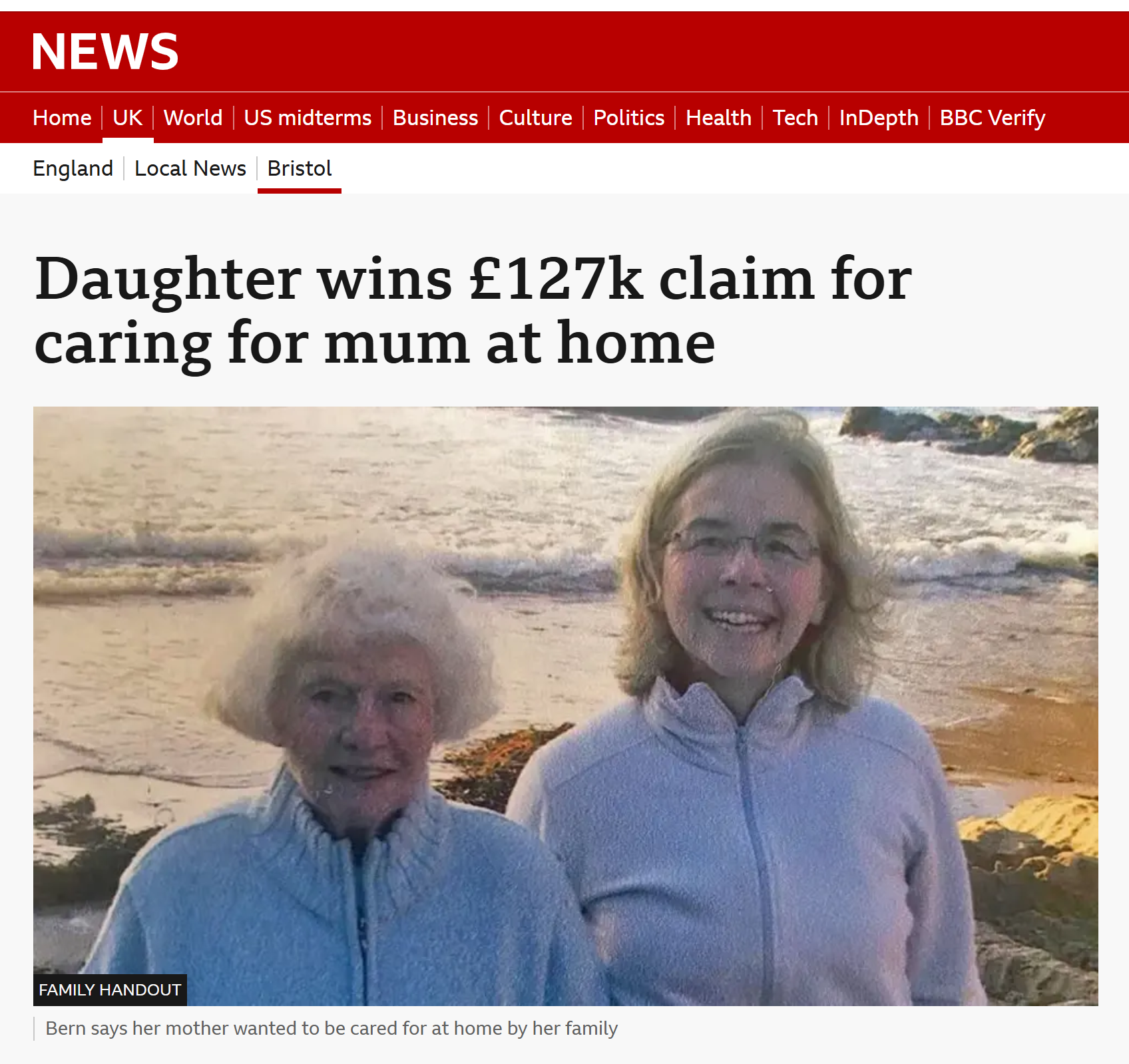
A reported case attracted national attention after the High Court awarded a woman more than £100,000 for caring for her elderly mother in the years before her death.
The woman had taken the civil action after she had been cleared of fraud and theft charges. The charges were brought after she took £100,000 from her late mother’s estate and relatives reported her to the police.
The woman said she had a verbal agreement with her mother that she would be paid for providing round-the-clock care to avoid her mother, a dementia-sufferer being placed in a care home.
However, the agreement was not referenced in the mother’s will.
The case demonstrates how disagreements over money, expectations and final wishes can quickly escalate into stressful, timely and costly court proceedings.
While every family and every estate is different, the story serves as a timely reminder of something we see regularly in practice: when wishes are unclear, outdated or disputed, the consequences can be significant for everyone involved.
At Bellavia & Associates, we regularly help clients put robust estate planning arrangements in place through professionally drafted Wills, while also assisting families who find themselves involved in inheritance disputes after a loved one's death.
A surprising number of people still do not have a Will. Some believe they are too young to need one. Others assume their assets will automatically pass to the right people. Many simply keep putting it off.
The reality is that a Will is one of the most important legal documents you will ever sign.
A properly prepared Will enables you to:
Decide exactly who inherits your assets.
Appoint guardians for children under 18.
Protect vulnerable beneficiaries.
Support inheritance tax planning.
Reduce uncertainty for your family.
Minimise the risk of future disputes.
Without a valid Will, your estate will be distributed according to the rules of intestacy, regardless of what your wishes may have been.
For unmarried couples, blended families and those with complex family circumstances, this can sometimes lead to outcomes that nobody intended.
The inheritance dispute in the news recently is far from an isolated case. Modern family life is often more complex than ever before.
Second marriages, cohabiting partners, blended families, family businesses and changing financial circumstances all create situations where different people may have different expectations about inheritance.
In many cases, disputes are not driven by greed. They arise because family members genuinely believe their loved one intended something different. Sometimes relatives are surprised by the contents of a Will. In other cases, they may question whether the Will was properly prepared or whether the deceased fully understood its contents.
When grief, uncertainty and money collide, disagreements can quickly emerge.
This is why careful planning during your lifetime is so important.
There are several reasons why estates become the subject of litigation.
These include:
Questions about whether a Will is valid.
Concerns about mental capacity when the Will was made.
Allegations of undue influence by another person.
Claims that somebody has been unfairly excluded.
Disputes involving executors and estate administration.
Situations where no Will exists at all.
Importantly, there is a legal distinction between challenging the validity of a Will and making a claim for reasonable financial provision from an estate. They are separate legal routes, each with different legal tests and requirements.
One of the biggest misconceptions surrounding inheritance law is that a person can simply challenge a Will because they believe it is unfair.
Unfortunately, it is not that straightforward.
In England and Wales, individuals generally have what's known as testamentary freedom. In simple terms, this means people are largely free to leave their estate to whoever they choose. The fact that someone is disappointed by the contents of a Will does not automatically mean the Will can be overturned.
Successful challenges typically require evidence relating to matters such as:
Lack of testamentary capacity.
Undue influence.
Fraud or forgery.
Improper execution of the Will.
Lack of knowledge and approval of its contents.
Obtaining early legal advice is often crucial in helping individuals understand whether they have grounds for a claim.
Bellavia & Associates provides specialist advice on both lifetime planning and contentious probate matters.
Our team can assist with:
Professionally drafted Wills.
Reviewing and updating existing Wills.
Estate and succession planning.
Lasting Powers of Attorney.
Trusts and asset protection strategies.
Inheritance disputes.
Contentious probate claims.
Executor and beneficiary disputes.
Claims involving inadequate financial provision.
Whether you are planning ahead to protect your loved ones or dealing with a disagreement following a bereavement, we provide clear, practical advice tailored to your circumstances.
A key member of our private client team is Claire Davis, Bellavia & Associates' Specialist Consultant in Wills, trusts and lifetime planning.
Claire is widely recognised for her expertise in helping clients navigate sensitive and often complex family circumstances. As the only Welsh director of the Association of Lifetime Lawyers, she brings a wealth of specialist knowledge in Wills, estate planning, trusts and inheritance matters.
Her experience extends beyond helping clients prepare carefully drafted Wills designed to protect future generations. Claire also advises individuals and families in relation to the potential inheritance disputes that could arise helping them understand their legal position to ensure that they can make fully informed decisions when creating a Will and Estate Planning.
Our Litigation Team advise and act for individuals and families in dealing with potential or issued inheritance disputes guiding them through what can be a particularly complex, difficult an emotional period.
Whether planning ahead or dealing with a dispute after a loved one's death, Bellavia & Associates combine technical expertise with practical, compassionate advice that puts clients' interests first.
The recent inheritance dispute featured by many news outlets is a powerful reminder that uncertainty around a person's estate can have lasting consequences for those left behind. What starts as a family disagreement can quickly become a legal dispute, consuming time, money and relationships.
A professionally prepared and regularly reviewed Will remains one of the most effective ways to protect your wishes, provide clarity for your loved ones and reduce the likelihood of future conflict.
And if disputes do arise, Bellavia & Associates has the experience and expertise to help you navigate the process and work towards the best possible outcome.
To discuss making a Will, updating an existing Will, or resolving an inheritance dispute, contact Bellavia & Associates and speak to a member of our specialist team.